
If you haven’t had to think about the roof over your head recently, consider yourself lucky…then take a moment to check your insurance policy to see how your roof is covered. Your insurer may have reduced what they’ll pay if it gets damaged and needs repair or replacing, but they may not have clearly explained the financial burden that’s now on you.
We recognize that higher premiums are forcing many households to accept reduced coverage, but we still recommend finding out what your share of roof repair costs will be and putting time into getting expert advice on your options.
As a non-profit that’s been helping people recover after disasters for 35 years, we know how critical insurance funds are, so we want to help you avoid opting for short term gain that will lead to long term pain. So we were not happy to learn that our nation’s Federal Housing Finance Agency
(FHFA) that required borrowers to carry Replacement Cost Value (RC) coverage on the homes (and roofs), if their mortgage is held by Fannie Mae and Freddie Mac. (Most people’s are).
Replacement Cost Value (RCV) coverage covers the cost of repairing or replacing your roof at current costs (up to policy limits). By contrast, Actual Cash Value (ACV) is depreciated coverage that only covers a portion of the damage. If you have ACV-only coverage and wind, heavy rain or hail damages your roof, you have to come up with cash to cover what is often a large gap in the costs of repairing or replacing it.
The FHFA’s recent change legitimizes a trend where many insurers are:
• Selling ACV-only coverage on roofs
• Adding a special high deductible applicable to wind or hail damage
• Dropping customers based on an aerial image of their roof
• Requiring a new roof as a condition of a renewal, even where the roof isn’t leaking and may still be under warranty
So what’s a property owner to do?
• Aim for RCV coverage and avoid ACV if feasible
• Find an insurance professional who will help you reduce your premium without sacrificing essential protection
• Maintain your roof and fix issues as soon as they arise
• When it’s time to replace your roof, fortify it with Fortified Roof, hail resistant tiles and/or Class A fire resistant materials. You should get a discount for a new or fortified roof
• Check for state grant programs and discounts to offset the cost, especially if you live in: Alabama, California, Florida, Kentucky, Louisiana, Maine, Minnesota, Mississippi, North Carolina, Oklahoma or South Carolina
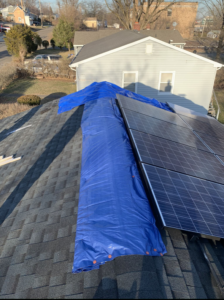
Restoring the structural integrity and water resistance of a roof is critical to preventing future damage and preserving the value of the property (and mortgage collateral). “Blue tarps” are an increasingly common phenomenon in hurricane areas due to ACV-only insurance on roofs. The recent FHFA rule will make that phenomenon even more common.
Instead of policies that bring short-term gain but long term pain, UP supports reforms that will help make home insurance affordable but keep it worth buying. We support a “US Re” proposal from economists with the Brookings Institution, Senator Adam Schiff’s INSURE Act and concepts outlined in this report. We support renewal rewards and mandatory premium discounts for completed risk reduction improvements.
We also support restoring and increasing Federal and State grants that help homeowners afford risk reduction improvements that will make their homes more resilient and qualify them for better insurance options: California, Florida, Louisiana, Alabama, Minnesota all need to grow their grant programs, and in Colorado, we’re supporting legislation to establish a Fortified Roof mitigation grant program.
*Originally published as the April 2026 Tip of the Month.